
Fictional climate puzzle · In development
Delayed Latch
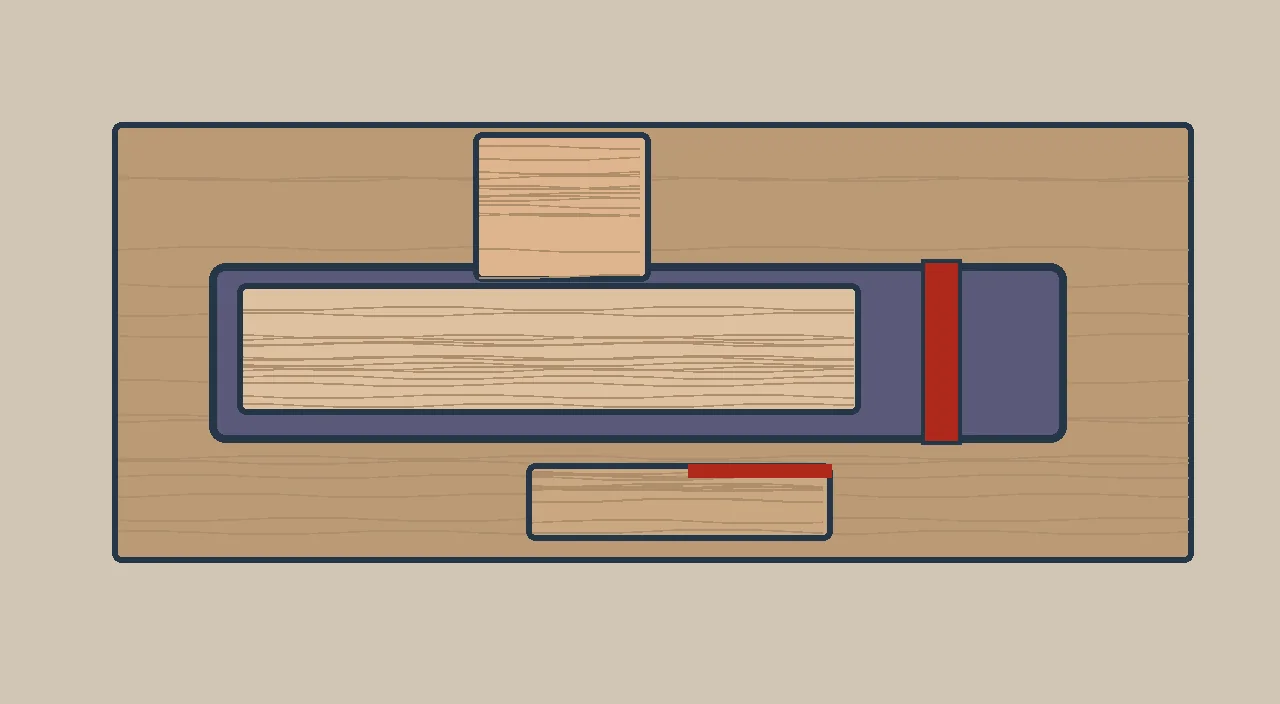
Delayed Latch takes place beside a tall workshop sash. A small wooden tab sits near the top of the opening. A heavier wood tongue holds the sash below it. They do not enter the next size category together when the game changes the virtual humidity. A short prototype uses that delay as its main decision. The player can wait for another virtual step or return the setting before the second part reaches the needed state.
Read the sash while part of it has already moved
Start the first trial with both pieces in their old positions. Select the drier condition and give a short response from the small tab. Its shape moves inside the notch. The big tongue remains in its previous category for one more virtual step. Even with the changed tab, the sash cannot release yet. The gauge can show the new selected condition while the parts display different results. The next advance lets the player see the tongue’s response. One short status reports which part is still holding the movement.
An alternate test changes the setting again before the larger part settles. Preserve the earlier tab state in the recap. The second result can show a delayed tongue with the tab returned to a configuration that occupies a different amount of room. If a player expects to be done, the record has two visible references to compare. The interface does not need a broad score. It can name the air choice, last wooden state and next possible action.
Preserve enough height in the picture
Art for the room uses a pale blue wall around the top of the sash. The wood near each side has a different grain and a labelled boundary. Give the tab and tongue separate captions. A red position mark can indicate where the latch still touches. On a small viewport an enlarged view of the lower piece can sit under the upper one. Save the current sash status above both if clipping could make a reader think the two references belong to different game rounds.
The prototype uses fictional change rates, shown as next-step conditions rather than actual time needed for wood to dry. A playable loop can show a rehearsal over three short advances. Reduced motion can use photos of the same corners in order. A summary might keep a small print of the gauge and much larger prints of the two latched areas. That leaves the figures where the decision can be understood even without seeing the whole window move.
Build the wait step before making the room bigger
The concept is in development. Put both parts in the same case and give them exactly one interval of difference. A user should settle the larger part and see if the smaller one still agrees. A second trial can make the earlier control change while the selected goal remains to open the sash. Print the before and after states on one proof. If a player answers with the current setting alone, help them find both records first. Only then add another responding object.
Read The Small Tab Moves First to see the two response records. Swell Joint holds the timing simple and concentrates on a clear groove. These original game concepts give a different role to the wood in each selection. They retain a visible statement of what the selected room has actually changed.